I’ve said on this podcast before that, if we’re lucky, we get about eighty summers.
The math is a little under thirty thousand days.
Most of us listening have already lived a third, half, or more of them.
I don’t hear that as a countdown meant to make us panic. I hear it as a reason to get honest about what our time costs.
That’s the center of my fascination with A.I.
How much can we compress the distance between where we are and the resources we need to live the way we want?
I’m not interested in filling every saved hour with more work. I want the work to take less of the life.
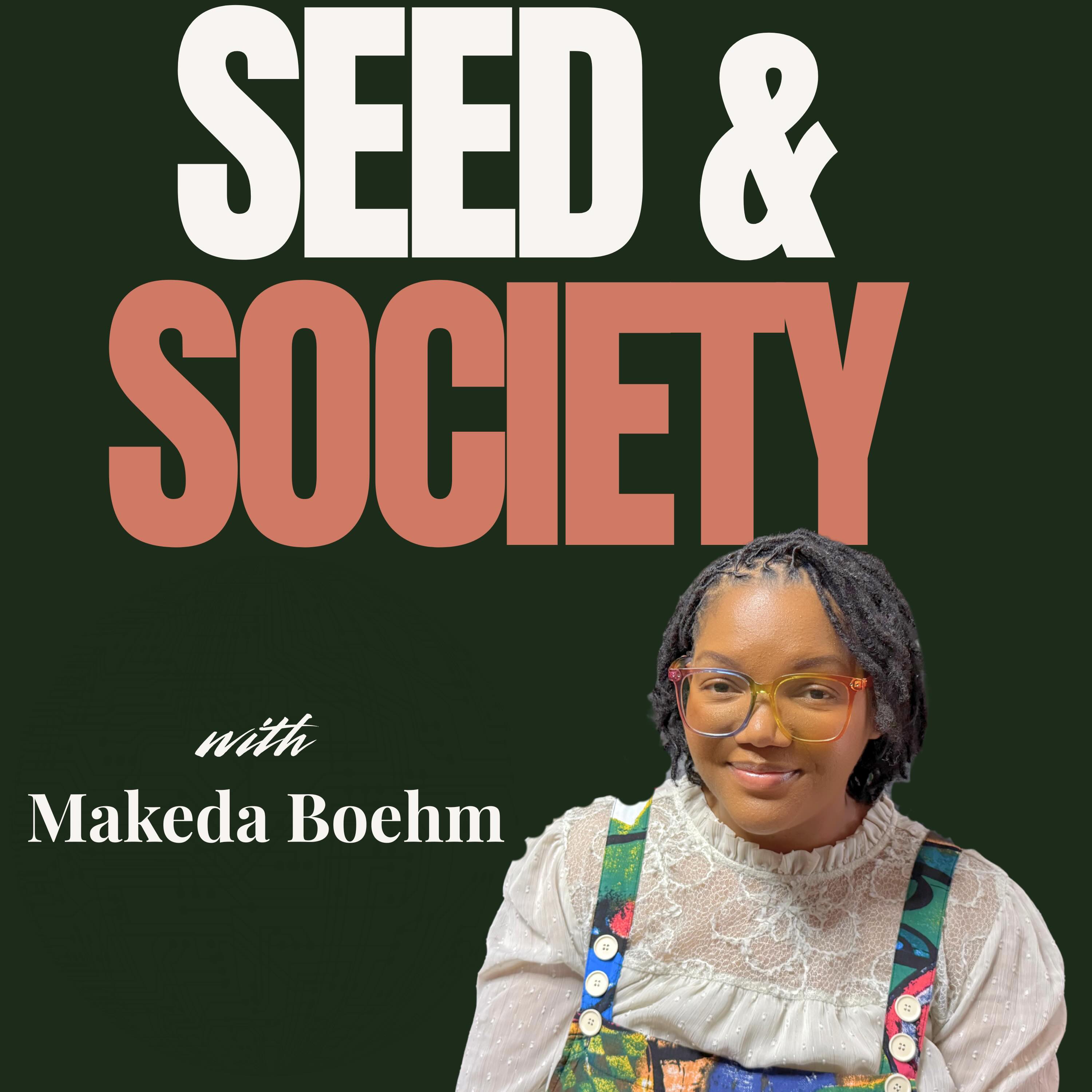
Pull up a chair. I’m Makeda Boehm, an A.I. Transformation and Adoption Strategist. I’ve closed nearly ten million dollars in tech sales over four years, earned seven figures doing it, and here I teach you how to use A.I., automations, systems, and agents to create more money, time, and options.
A.I. is moving at the speed of daily, and I help you keep up.
Context Training reached number one in Amazon’s Document Management category on launch day.
I’m a number one bestselling author now.
That’s wild.
I’m proud of it. I’m grateful for it. And I didn’t write the book for that outcome.
But the ranking is evidence of something.
The book went from an idea to a published bestseller in about sixty days.
Those weren’t sixty empty days. I still had a job, a business, a family, a home, and a life that was already in motion. The subject of the book had also been forming for years through my work, my experiments, my voice memos, and the questions I kept coming back to.
A.I. helped me gather that thinking while it was scattered across different places. It helped me see patterns, test the structure, find gaps, organize production, and keep the work moving after I’d made a decision.
I didn’t have to wait until I had the time to manually search every old conversation or carry every file from one stage to the next.
My judgment stayed in the process. The process simply stopped requiring my hands at every turn.
That’s the kind of time compression I care about.
Speed means doing the same process faster. Compression means questioning why all of those steps were necessary in the first place.
I expected the process to take much longer. My actual timeline was about two months, and the finished book still had to sound like me, hold my ideas, survive my corrections, and receive my approval.
The goal wasn’t to remove myself from the work. The goal was to remove the waiting and repetition around the part that actually needed me.
Then the book launched on a Friday before a holiday weekend.
There were no paid ads. It moved through LinkedIn, word of mouth, old-fashioned text messages, and people who were willing to buy it, read it, and share it.
Reaching number one told me that the idea was recognizable to people outside my own head.
They knew the experience of opening a powerful A.I. tool and still not getting what they needed. They knew what it felt like to keep starting over, repeating themselves, and doing the work between the answers.
The ranking showed me that this particular idea reached people when I made it concrete enough for them to use.
That matters because access has shaped my life.
I got my G.E.D. at sixteen. I’ve experienced housing insecurity at more than one point. I know how much the resources around you can change the choices available to you.
That’s why I keep talking about more money, more time, and more options.
Money matters because it can make panic less powerful. Time matters because it gives us more of our lives back. Options matter because they let us choose beyond whatever is most urgent today.
A.I. can’t give everybody the same starting point. It can reduce the time and expense attached to certain kinds of knowledge and work. That creates an opening that didn’t exist at this scale before.
I want more people to be able to use that opening.
Wherever you’re listening, the tools, accounts, infrastructure, and opportunities around you may be different. The calendar isn’t. Everybody’s day still ends.
So a saved hour has to mean more than an efficiency metric.
A saved hour can become dinner without a laptop open, school pickup, rest, the application submitted before the deadline, or enough room to decide what you want next.
That same question sits underneath EverFreely, the product I’m building now.
An opportunity can technically be available and still be out of reach if finding it, understanding whether it fits, and preparing a strong application takes more time than someone has.
I’m building EverFreely to test how much of that distance a system can carry while the person keeps the decisions that belong to them.
The book teaches the approach. EverFreely is one place where I’m turning that approach into something people can use.
Here’s the question I want to leave with you.
Look at something you’ve postponed because it feels too large or takes too long. What part of it truly needs your judgment, and what part only needs someone to carry the work?
Keep the judgment.
See how much of the carrying A.I. can do.
A.I. might gather the source material before you compare it, turn a month of notes into the first organized version of something you’ve wanted to make, or build the document after you’ve decided what it needs to say.
Compression isn’t skipping the part that makes the work yours. It’s refusing to spend a finite day on a step that no longer needs to consume it.
Context Training reaching number one is a beautiful milestone. More than that, it’s proof that an idea can move faster without arriving empty.
If you bought the book, read it, shared it, texted somebody about it, or posted it where another person could find it, thank you. You helped this idea travel farther than I could’ve moved it alone.
If you haven’t read Context Training yet, you can find it on Amazon. The link is in the show notes.
That’s more money, because A.I. can lower the cost of turning what you know into something useful and sellable.
That’s more time, because the searching, sorting, organizing, and carrying don’t all need your hands anymore.
And that’s more options, because money and time create room to choose beyond whatever is most urgent today.
We get about thirty thousand days if we’re lucky.
I want this technology to help us keep more of them for living.
Until next time, continue planting the seeds for a better society.